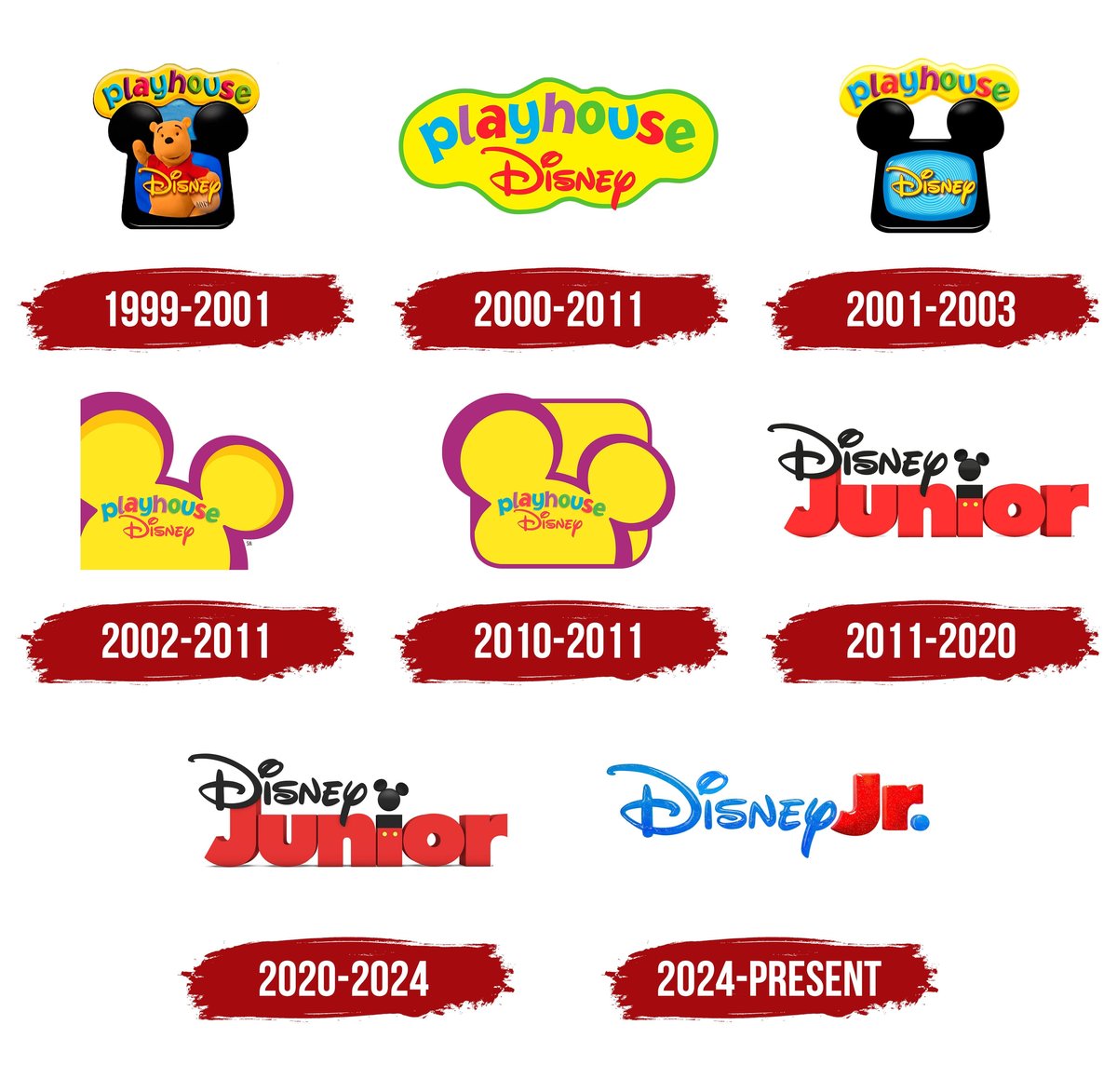
The magic of Disney isn't just in its stories; it's woven into every detail, including the carefully crafted visual identity that greets audiences. For younger viewers, that magical gateway is often Disney Junior. But have you ever paused to consider the intricate design elements and symbolism of the Disney Jr. logo? It's far more than just a name; it’s a dynamic, evolving character in itself, constantly adapting to connect with its audience while retaining a core sense of beloved heritage.
From its vibrant colors to its playful typography, the Disney Jr. logo serves as a powerful visual cue, signaling a world of imagination and learning. Its journey from a static identifier to a flexible, character-infused emblem reveals a deep understanding of its preschool audience and the ever-changing landscape of media.
At a Glance: Key Takeaways on the Disney Jr. Logo's Evolution
- The Enduring "Disney" Script: The iconic Walt Disney signature remains a constant, symbolizing heritage, trust, and quality.
- Dynamic "Junior" (2011-2024): The "Junior" portion was a creative canvas, often morphing its letters to represent specific characters or elements from popular shows.
- The 2024 Rebrand: A significant refresh introduced a more streamlined "Jr." with a blue dot, updating the look for a modern, digital-first era.
- Alternative "DJr." Logo: A highly adaptable, shortened version designed for social media and quick recognition.
- Detailed Production Logos: Beyond the channel branding, specific production logos evolved with CGI, unique audio, and visual flair, marking content originating from Disney Junior.
- Targeted Design: Every change, from a character's face replacing a letter to a bouncing animation, is strategically designed to engage young minds and create immediate recognition.
The Foundation: Walt Disney's Enduring Signature
At the heart of every Disney Jr. logo, across all its iterations, lies the unmistakable "Disney" script. This isn't just a font; it's a direct connection to Walt Disney himself, a handwritten legacy that has transcended generations and remains one of the most recognized brand marks globally. Rendered in flowing, cursive strokes, this element anchors the entire brand identity, symbolizing trust, nostalgia, and the timeless quality associated with the Walt Disney Company.
For Disney Junior, this iconic script serves a crucial purpose: it immediately establishes the brand as part of the larger, trusted Disney family. It tells parents and children alike that the content they are about to experience upholds the same standards of storytelling, imagination, and wholesomeness they expect from Disney. Whether it's in classic black, a vibrant red, or a cool blue, the signature "Disney" is the unwavering lighthouse guiding families to content they can rely on.
The Playful Heart: How "Junior" Found Its Character (2011-2024)
The genius of the Disney Jr. logo, particularly in its original form from 2011 to 2024, wasn't just in its iconic "Disney" half, but in how it reimagined the "Junior" section. This bold, red, block-lettered "Junior" became a dynamic playground, an ever-changing canvas designed to delight and instantly connect with its target audience.
The original 2011 logo itself set the stage for this playful approach. It featured the "Disney" script in black, with "Junior" in a large, bold red font. The most delightful touch? The dot of the "I" in "Junior" was cleverly replaced by Mickey Mouse's head, an immediate and universally recognized symbol of Disney fun. This subtle yet significant detail transformed a simple letter into a miniature character moment, signaling the channel's focus on beloved figures.
A Masterclass in Character Integration: "Junior" as a Storyboard
Where the 2011-2024 logo truly shined was in its myriad variations tailored to specific shows. This wasn't merely a logo; it was an extension of the storytelling. The fundamental rule remained: "Disney" kept its classic script. But the letters of "JUNIOR" would undergo delightful transformations, each letter becoming a mini-character or a key element from the show it represented. This strategy was brilliant, offering immediate visual cues about the show and fostering deeper engagement even before an episode began.
Consider these iconic examples of how "Junior" became a vibrant tapestry of character details:
- Mickey Mouse Clubhouse: In a nod to friendship and teamwork, each letter in "JUNIOR" was reimagined as a beloved character:
- J for Goofy
- U for Minnie Mouse
- N for Pluto
- I for Mickey Mouse (naturally, as the central figure)
- O for Donald Duck
- R for Daisy Duck
This full ensemble not only highlighted the show's cast but also subtly emphasized the theme of collective adventures, all within the channel's identifier. - Jake and the Never Land Pirates: The swashbuckling world of Jake and his crew was integrated directly into the logo, using elements critical to their adventures:
- J for Cubby's map, suggesting exploration and discovery.
- U for the crow's nest, a lookout point for impending pirate fun.
- N for a treasure chest keyhole, hinting at exciting quests.
- I for Jake himself, the young leader.
- O for Bucky's steering wheel, signifying control and direction.
- R for Skully, the parrot companion, adding a touch of humor and loyalty.
Each letter became a mini-prop from the show, immersing viewers in the pirate world instantly. - Doc McStuffins: The compassionate world of Doc McStuffins, where toys come to life, was beautifully reflected in her logo variant:
- J for Chilly, the timid snowman.
- U for Lambie, the cuddly lamb.
- N for Hallie, the hippo nurse.
- I for Doc McStuffins, the caring doctor.
- O for Squeakers, the fish.
- R for Stuffy, the lovable dragon.
This variant not only showcased the beloved toy characters but also reinforced the show's themes of care, friendship, and helping others, making the logo a warm, inviting visual.
Beyond Individual Letters: Full Logo Transformations
Some variations took the customization even further, altering the overall look and feel of the "Junior" element to match the show's aesthetic. For instance, the logo for 101 Dalmatians: The Series famously adopted a white color scheme peppered with black spots, instantly evoking the iconic animated canines. Similarly, Minnie's Bow-Toons utilized a vibrant pink with white spots, perfectly aligning with Minnie's playful, fashion-forward brand. Even regional variations existed, like specific designs for Art Attack (UK) or Disney Princess (Latin America), showcasing global adaptability.
This period of the Disney Jr. logo's life truly emphasized the channel's commitment to its content and its audience. It taught kids to look closer, to find their favorite characters hidden in plain sight, turning a brand identifier into an interactive game.
A Fresh Look: The 2024 Rebrand and Its Significance
As media consumption habits evolve and brands seek to refresh their image, Disney Junior embarked on a significant rebrand in 2024. On June 1st, after thirteen years, the iconic 2011 logo was retired, making way for a sleeker, modernized visual identity that reflects a contemporary sensibility while still honoring its heritage. This strategic refresh wasn't just about aesthetics; it was about optimizing the brand for an increasingly digital landscape.
The Current 2024 Logo: Streamlined and Sophisticated
The new primary logo introduces a refined aesthetic. The "Disney" script, maintaining its classic charm, now appears in a calming blue hue, a subtle departure from the traditional black. The most noticeable change, however, is in the "Junior" component. It has been streamlined to a bold, red "Jr." with a lowercase 'r', followed by a small, distinctive blue dot.
This shift from "Junior" to "Jr." signifies a move towards a more concise, contemporary feel. The blue dot acts as a clever punctuation mark, adding a touch of playfulness and modernity while subtly echoing the blue of the "Disney" script. It's a design that feels crisp, clean, and adaptable across various platforms, from television screens to mobile apps. This simplified form is easier to reproduce and recognize quickly, crucial in today's fast-paced visual environment.
The Alternative 2024 Logo: Digital-First Adaptability
Recognizing the pervasive influence of social media and smaller screen formats, Disney Jr. also introduced an alternative logo in 2024. This version takes the abbreviation further, featuring only the "D" from the blue Disney script, followed immediately by the familiar red "Jr." and its blue dot.
This "DJr." variant, first seen with characters like Ariel, is a masterstroke in digital branding. It maintains instant recognizability while being incredibly compact. For social media profiles, app icons, or small digital banners, a full logo can become cluttered or illegible. The "DJr." effectively distills the brand to its essence, providing a memorable, scalable, and versatile mark perfectly suited for the demands of modern digital communication. It speaks to a clear strategy: consistent branding across all touchpoints, optimized for each specific medium.
Beyond the Marquee: The Evolution of Disney Jr. Production Logos
While the main channel logo serves as the primary brand identifier, the production logos are equally important. These are the visual and auditory stamps that appear at the end of shows, signifying that the content was produced or acquired by Disney Junior. They often feature more elaborate animation and sound design, acting as mini-signatures for each program. Their evolution mirrors the main logo's journey, reflecting technological advancements and shifting brand aesthetics.
The Iconic Original Production Logo (2011-2024)
For over a decade, the primary production logo for Disney Junior was a vibrant, animated sequence.
- Visuals: It began with the familiar Disney Junior logo (the red "Junior" with Mickey's head as the 'i' dot, and the "DiSNEY" in its corporate font above it) shrinking into the distance. This was followed by a burst of fireworks, creating a celebratory and magical conclusion to each episode.
- Technique: Crafted with CGI by We Are Royale (Los Angeles), utilizing industry-standard software like Cinema 4D, Photoshop, and Illustrator, it represented a blend of artistry and technical prowess.
- Audio: The sound design was equally memorable: a build-up of suspenseful strings with a subtle rising synth, culminating in a distinctive four-note orchestral melody. This melody was adapted from David Norland's signature Disney Junior jingle, often accompanied by the whimsical sound of fireworks.
- Legacy: This logo graced numerous beloved programs produced from 2010 onwards, including Jake and the Never Land Pirates, Doc McStuffins, Sofia The First, and Puppy Dog Pals. It was even retroactively applied to new prints of older Playhouse Disney shows, ensuring a consistent brand experience. Intriguingly, it continues to appear on some newer programs like Mickey Mouse Funhouse and SuperKitties even after the 2024 channel rebrand, highlighting its enduring presence.
The Short-Lived First 2024 Production Logo (June-October 2024)
Following the channel's June 2024 rebrand, an initial production logo was introduced, but its tenure was brief, indicating a transitional phase or quick refinement.
- Visuals: This version was a static, digital graphic. It featured the "DiSNEY" corporate font alongside the red "Jr." in Futura Bold Extended, all set against a clean white background. It was a straightforward, no-frills approach.
- Technique: A simple static digital graphic, emphasizing clarity and brand recognition.
- Audio: Typically, it played out with the show's closing theme, without a distinct jingle of its own.
- Availability: It debuted with Ariel and appeared on new programs immediately after the rebrand. Its simplicity reflected the channel's move towards a more streamlined primary logo.
The Current, Dynamic Second 2024 Production Logo (August 2024-Present)
The rapid introduction of a second production logo in August 2024 signaled Disney Junior's commitment to bringing back the dynamism and playful energy its production marks are known for.
- Visuals: This logo is a burst of vibrant CGI animation. It begins with a red-pink gradient shape, which then expands into a large white circle, filling the screen. This circle then transforms, revealing a blue-gradient background diagonally separated, against which the blue "Disney" corporate font bounces playfully. The red "Jr." (in Futura Bold Extended, with its blue dot) then appears, growing and shrinking dynamically. All the text is beautifully embedded within a colorful pink-blue gradient background.
- Technique: Full CGI animation, leveraging modern capabilities to create an engaging visual experience.
- Audio: Accompanying the visuals is a cheerful, whimsical three-note melody, punctuated by the joyful sound of children shouting "Hooray!" This auditory cue perfectly encapsulates the celebratory and fun spirit of Disney Junior. On some shows, it might be silenced or accompanied by the show's own end theme.
- Impact: This latest production logo recaptures the magic and movement that characterized the earlier version, ensuring that even the end-of-show branding leaves viewers with a smile and a sense of delight. It beautifully complements the streamlined main channel logo by adding back a layer of animated fun.
The evolution of these production logos illustrates a constant pursuit of resonance with the audience, balancing brand consistency with the desire for fresh, engaging visual and auditory experiences.
What These Evolutions Tell Us About Branding for Young Audiences
The journey of the Disney Jr. logo isn't just a tale of design changes; it's a strategic narrative about how a major brand adapts to connect with its most precious audience: young children. Each shift, from incorporating characters into letters to streamlining for digital platforms, reveals a deep understanding of developmental psychology and modern media consumption.
Adaptability and Platform Optimization
The 2024 rebrand, with its simplified "Jr." and the even more compact "DJr." alternative, speaks volumes about the current media landscape. Children today consume content across a myriad of devices and platforms. A logo needs to be instantly recognizable and legible whether it's on a large TV screen, a tablet, or a tiny social media icon. The "DJr." variant, specifically tailored for social media, highlights a proactive approach to maintaining brand presence and accessibility wherever young audiences (and their parents) are. This strategic thinking ensures the brand isn't just present but effective across all touchpoints. For more insights into how branding translates across digital spaces, you might explore resources like All about the Disney Jr. logo.
The Power of Engagement Through Familiarity
The most striking aspect of the 2011-2024 "Junior" variations was their ingenious use of characters. By literally weaving beloved figures like Mickey Mouse, Doc McStuffins, or Jake the Pirate into the letters of the logo, Disney Junior created an unparalleled level of immediate recognition and engagement. For a child, seeing their favorite character in the channel's name itself fostered a deeper emotional connection, blurring the lines between the brand and the content. It's a powerful lesson in making a logo not just an identifier, but a playful extension of the brand's core offering. This also helps with brand loyalty from a very young age.
Balancing Heritage with Modernity
Throughout all these changes, the "Disney" script remains the constant. This masterstroke ensures that while the "Junior" part can be playful, modern, or character-driven, the foundational trust and quality associated with the Walt Disney Company are never compromised. It's a delicate balance: innovate and adapt for a new generation, but always remember the roots that give the brand its unparalleled authority and warmth. The shift to a blue "Disney" script in 2024 is a subtle modernization that feels fresh without losing any of the iconic recognition.
Sound and Motion: A Holistic Brand Experience
The detailed evolution of the production logos, particularly their sophisticated CGI and memorable audio cues, underscores the understanding that branding for children is a multi-sensory experience. A cheerful jingle, a dynamic animation, or the sound of children cheering ("Hooray!") creates an auditory and visual signature that is just as potent as the static logo itself. These elements contribute to the overall brand personality: joyful, imaginative, and endlessly entertaining.
Common Questions About the Disney Jr. Logo's Look
Understanding a brand's visual identity often brings up a few key questions. Here are some common queries about the Disney Jr. logo and its strategic design choices:
Why did Disney Jr. change its logo in 2024?
The 2024 rebrand was a strategic move to modernize the Disney Junior identity. After over a decade, a refresh helps keep the brand current, particularly in adapting to evolving digital media landscapes and contemporary design trends. The streamlined "Jr." and the versatile "DJr." logo are designed for better legibility and impact across various platforms, ensuring the brand remains fresh and relevant to its target audience and their parents.
What was the significance of Mickey Mouse in the old "Junior" logo?
In the 2011-2024 primary logo, Mickey Mouse's head famously replaced the dot of the "I" in "Junior." This was a powerful symbolic gesture. Mickey Mouse is the quintessential Disney mascot, universally recognized and loved. His inclusion immediately communicated the playful, friendly, and quintessential Disney nature of the channel, acting as an early and direct identifier for young viewers.
How did the character-specific logos get designed for shows like Doc McStuffins or Jake and the Never Land Pirates?
These highly creative logo variations were the result of close collaboration between brand designers and the creative teams behind each show. The goal was to intricately weave specific characters or iconic elements from the series into the "JUNIOR" letters. This process involved understanding the core visual identity and key figures of each show, then translating those into stylized letterforms that were both recognizable and aesthetically cohesive with the Disney Jr. brand. It required a blend of character design, typography, and marketing insight.
Will the Disney Jr. production logos continue to change?
Given the rapid evolution from the static 2024 logo to the more dynamic second 2024 version, it's highly likely that Disney Jr.'s production logos will continue to evolve. As animation technology advances, and as the brand seeks new ways to surprise and delight its audience, these animated signatures offer a perfect opportunity for fresh visual and auditory experiences. Brands, especially those targeting children, often iterate on their visual identities to stay innovative and engaging.
Looking Ahead: The Future of Disney Jr.'s Visual Identity
The evolution of the Disney Jr. logo is a testament to the fact that a brand's visual identity is never truly static, especially in the fast-paced world of children's entertainment. The journey from the character-laden "JUNIOR" to the streamlined "Jr." and the digital-first "DJr." reveals a brand acutely aware of its audience and the shifting media landscape.
Expect future iterations to continue this delicate dance between heritage and innovation. We might see even greater integration of augmented reality or interactive elements in brand displays, or perhaps an even more fluid, adaptable logo system that can instantly morph to reflect current trending characters or seasonal themes. The blue dot in the current "Jr." logo, for instance, could become a miniature interactive element in future digital applications.
Ultimately, the goal remains constant: to create a visual identity that is instantly recognizable, trustworthy for parents, and utterly captivating for children. The Disney Jr. logo, in all its forms, is more than just a mark; it's a promise of magic, learning, and fun, always evolving to keep pace with the imaginations it inspires.